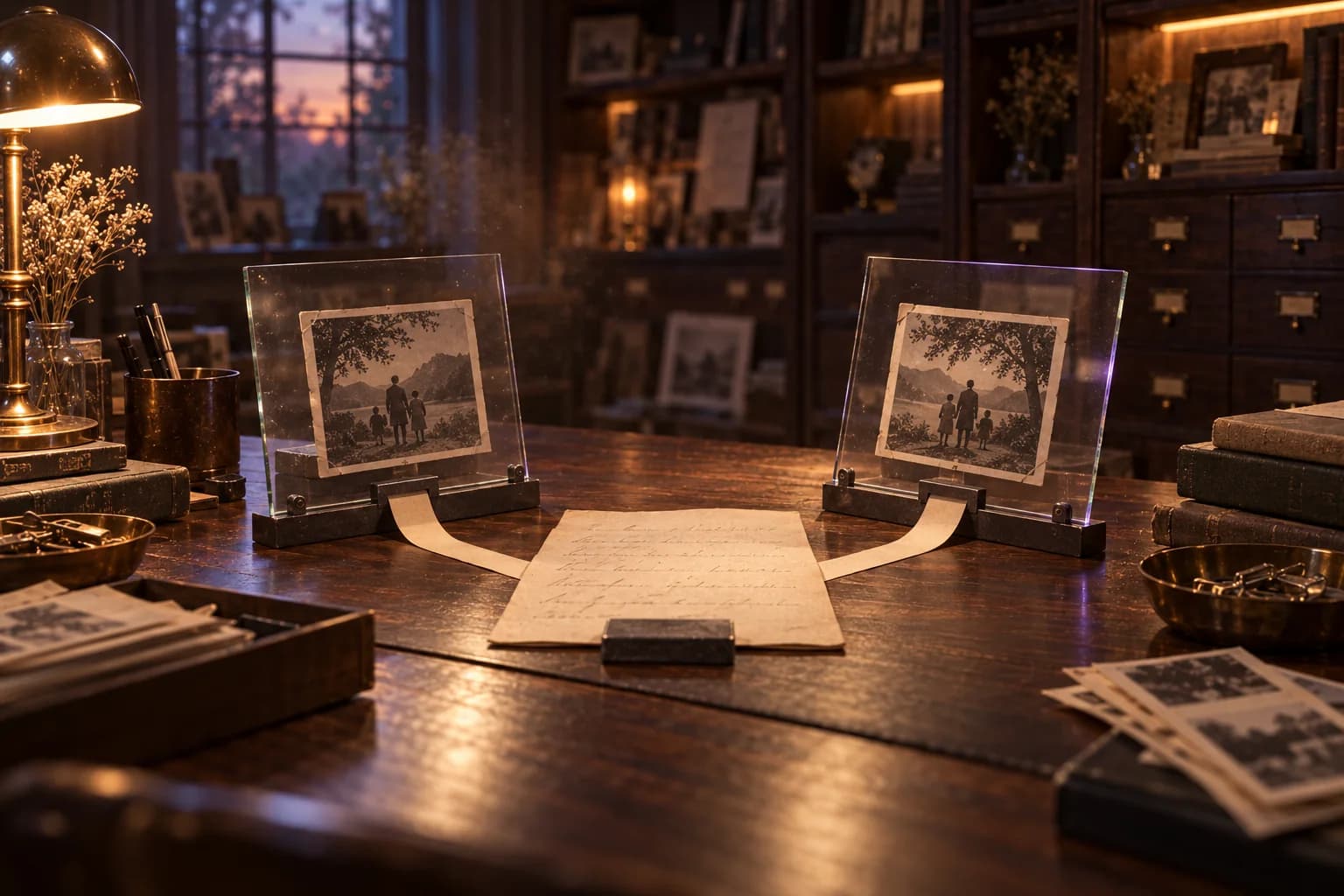
The split memory
SwiftData CloudKit mirroring and a custom CloudKit path overlapped. Two systems were claiming responsibility for the same conceptual job.
What it taught the system
Give Echo synchronisation one authoritative owner.
Specimen 002 / An archive of human memory
Capture today for tomorrow.
Native Apple application
What happens to a story when the person who remembers it disappears?
Record. Reflect. Remember.
Folder 01 / Origin
A photograph can preserve a face. It cannot preserve why they laughed.
We keep birthdays. Weddings. Holidays. We rarely keep Tuesday: the small story over dinner, the reason we left somewhere, the thing our father used to say.
Memoir Echoes began with a fragile arrangement. Our most valuable stories often exist in only one place — someone’s memory.
What parts of us disappear because nobody thought to ask?
Folder 02 / Experiment
Most people never sit down to write an autobiography. But ask the right question and a story arrives.
The experiment was to let someone speak naturally, then help their words become an Echo: a memory they could revisit, refine and place in a growing memoir.
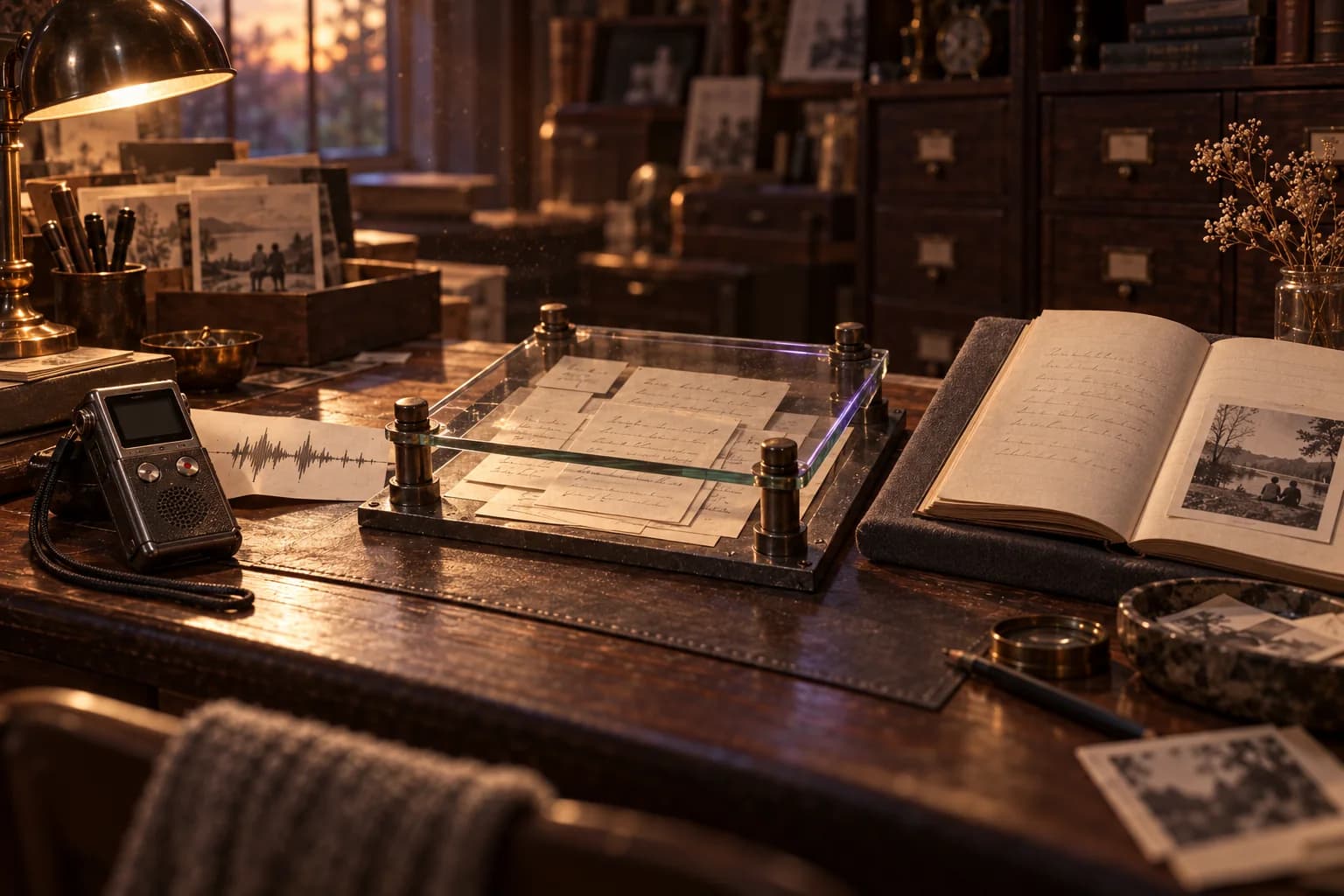
Speak while the memory is close. Speech becomes text. A memory can also begin in writing.
With permission, AI helps shape the transcript. The experience and perspective remain the person’s own.
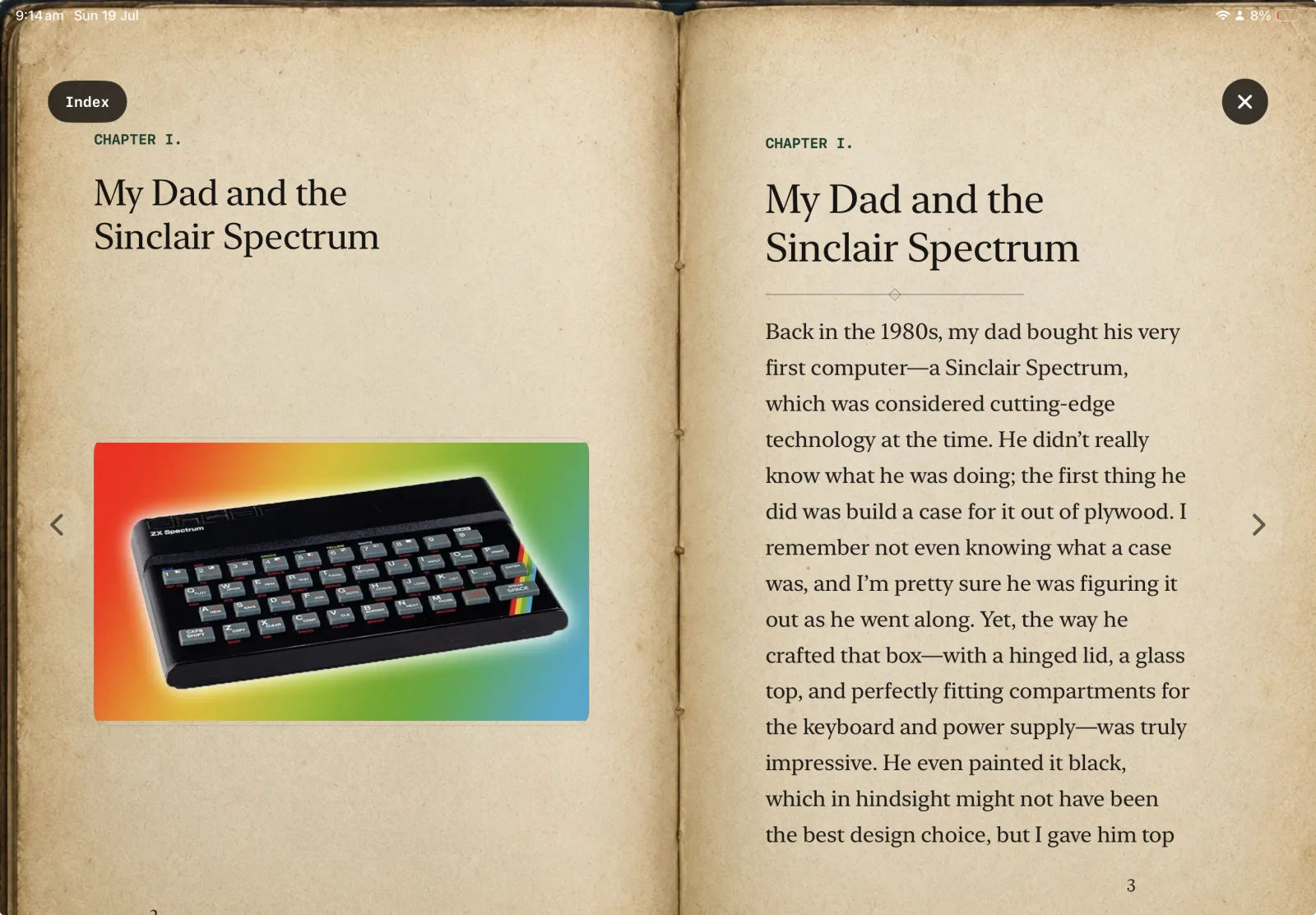
Add photographs. Gather Echoes into chapters. Let a life story grow gradually.
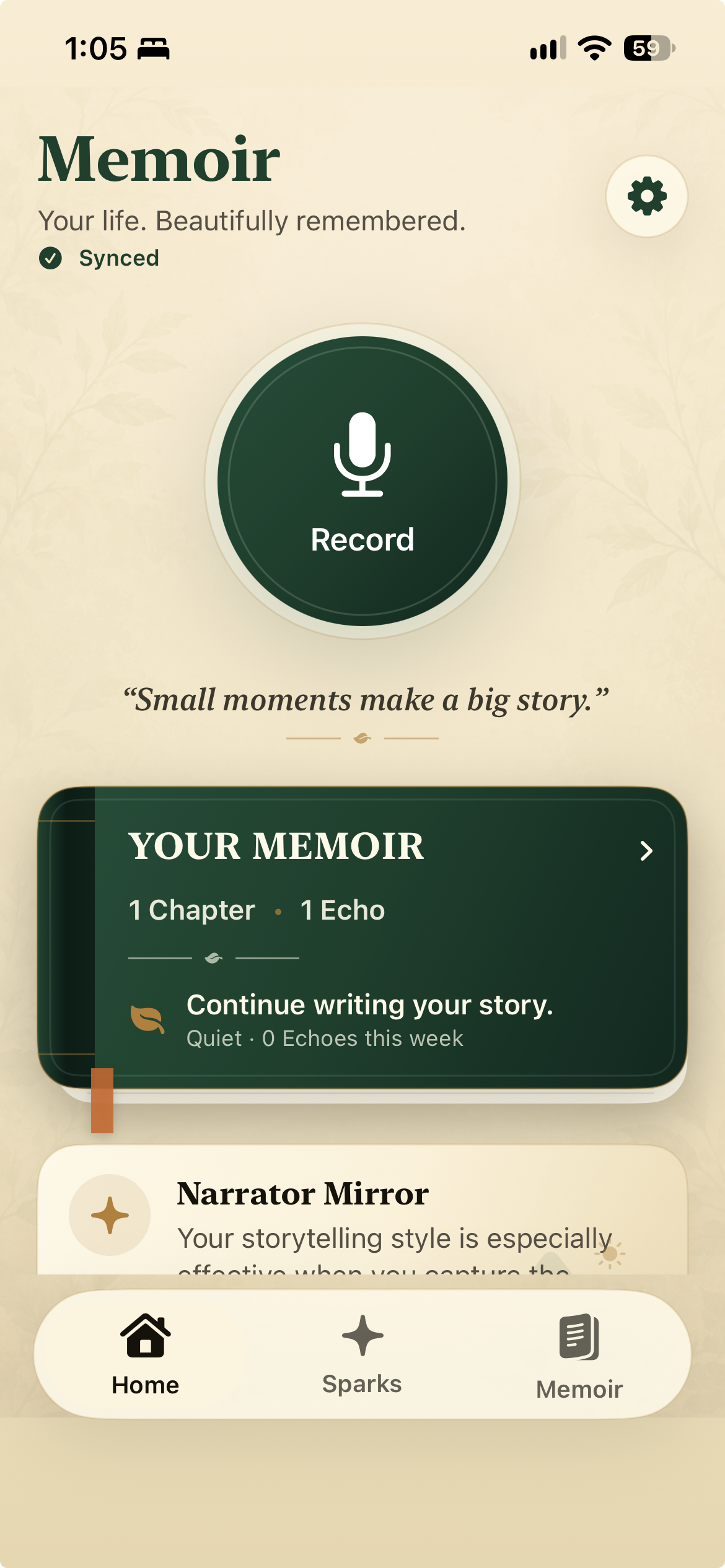
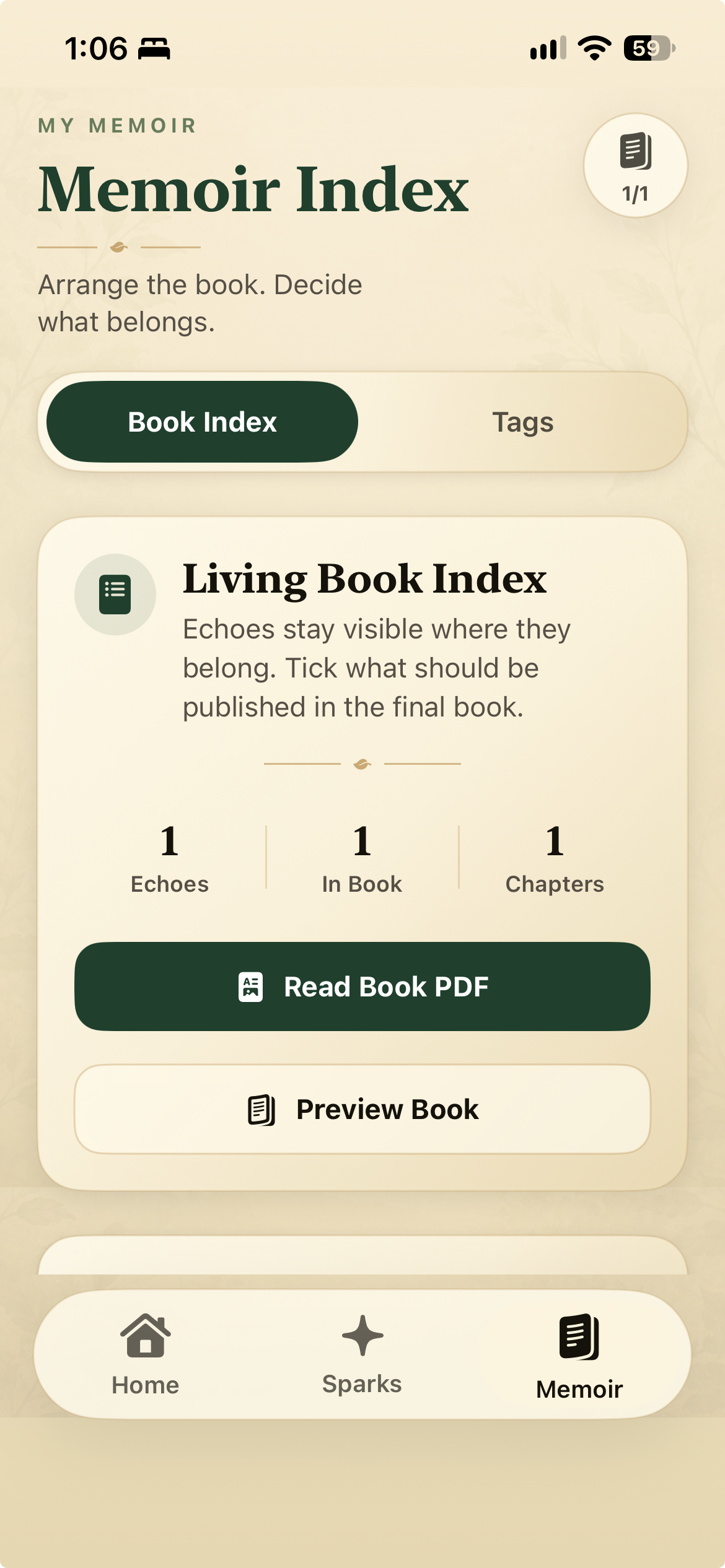
Read, reflect and refine. Export a PDF memoir to keep or share on your own terms.
The person lived it. The machine helps with the page.
Folder 03 / System
Moment → Echo → Chapter → Memoir
One memory at a time, a collection begins to reveal a life.
iPhone / Capture
In the kitchen. On a walk. After a conversation. Begin with a spoken thought or a few written words, while they are still close.
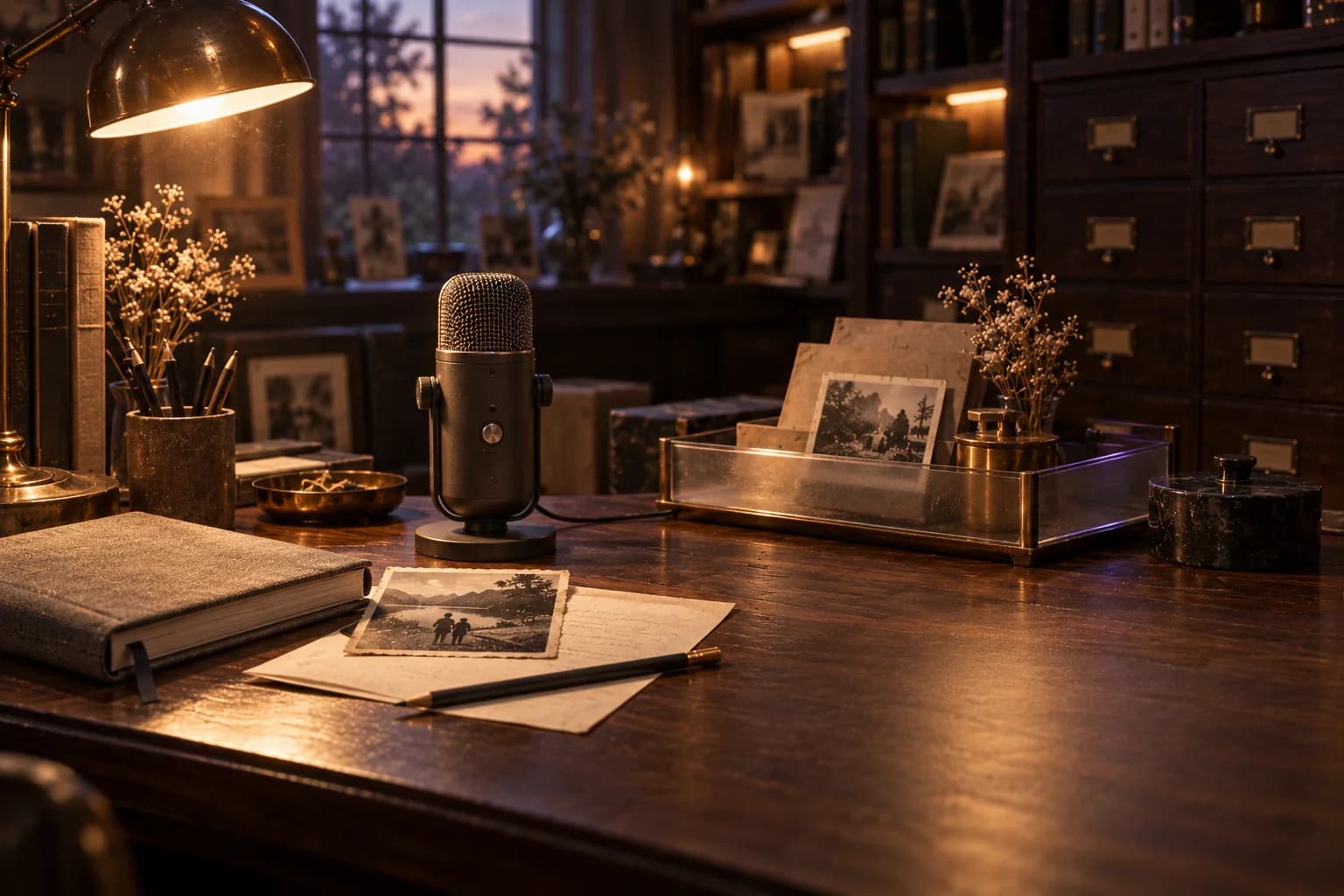
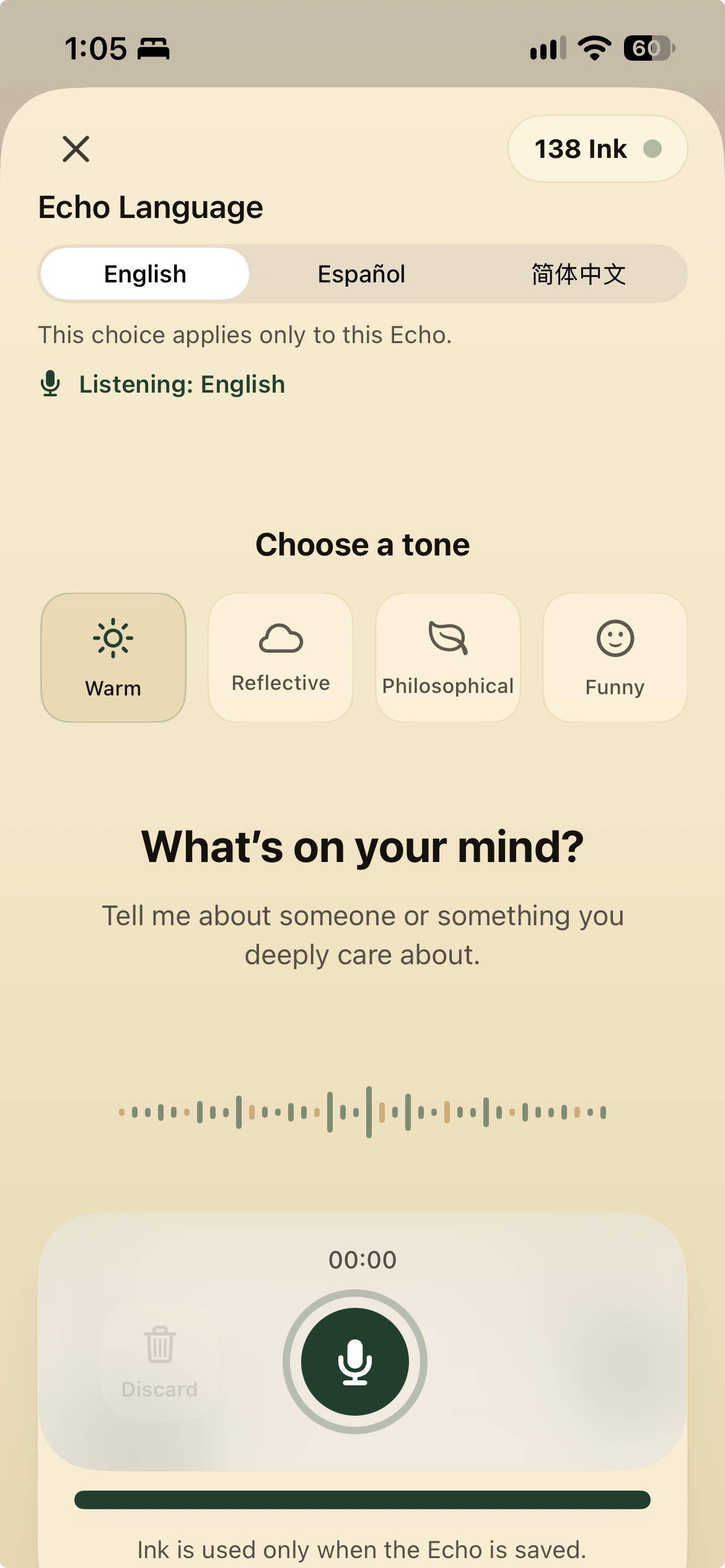
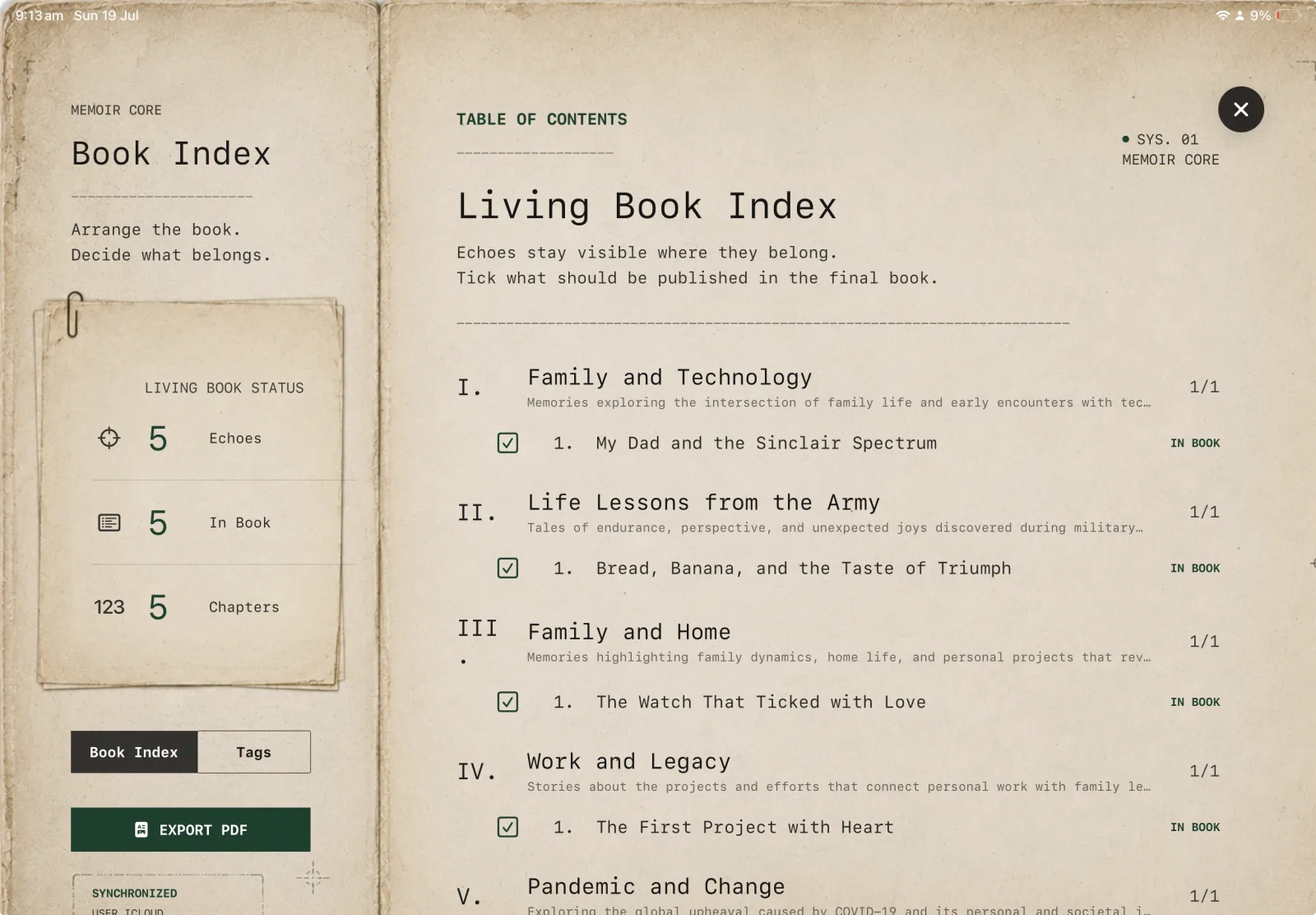
iPad / Reflection
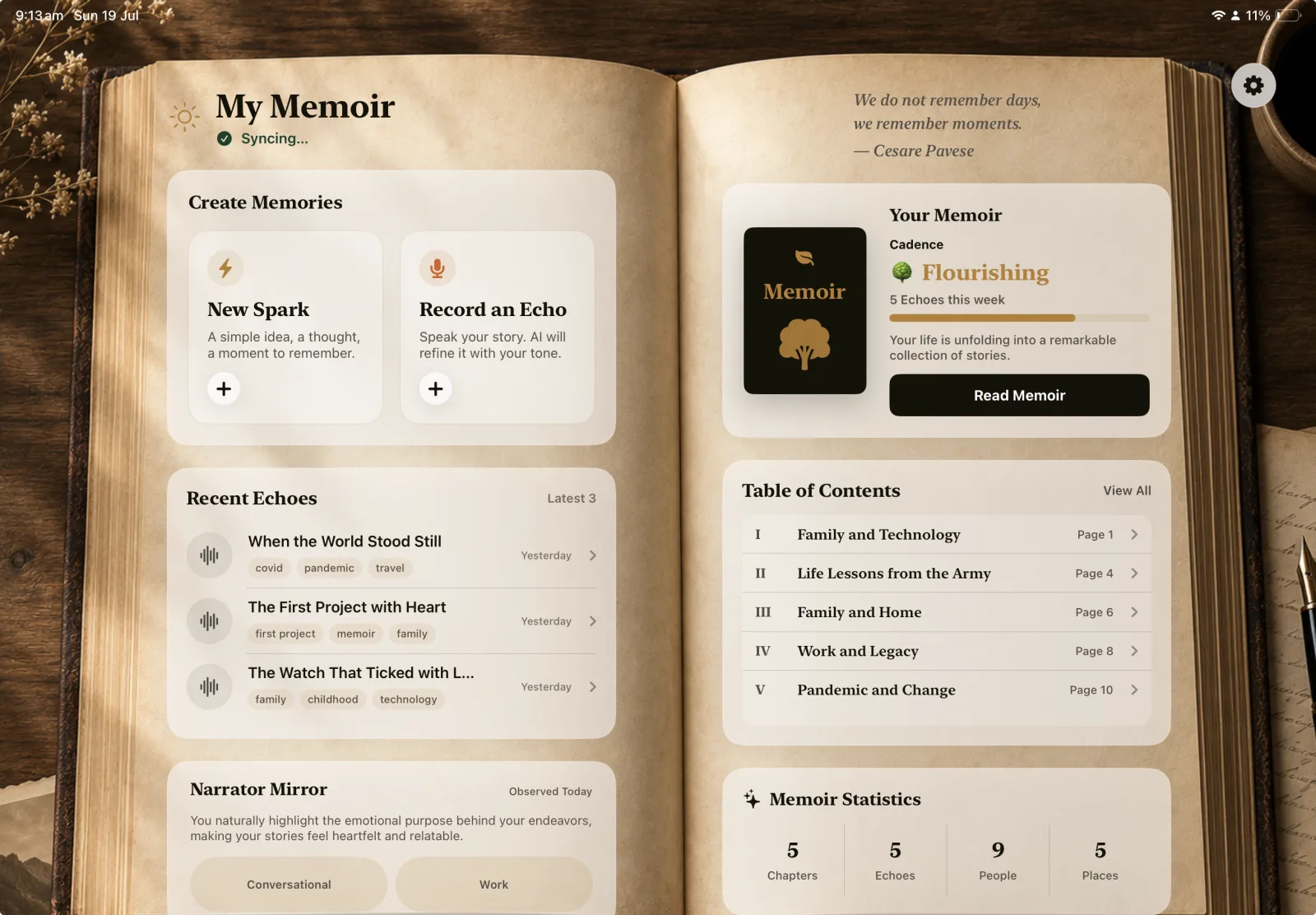
A larger page. Room to read, organise and see the threads between memories. The archive begins to feel like a book.
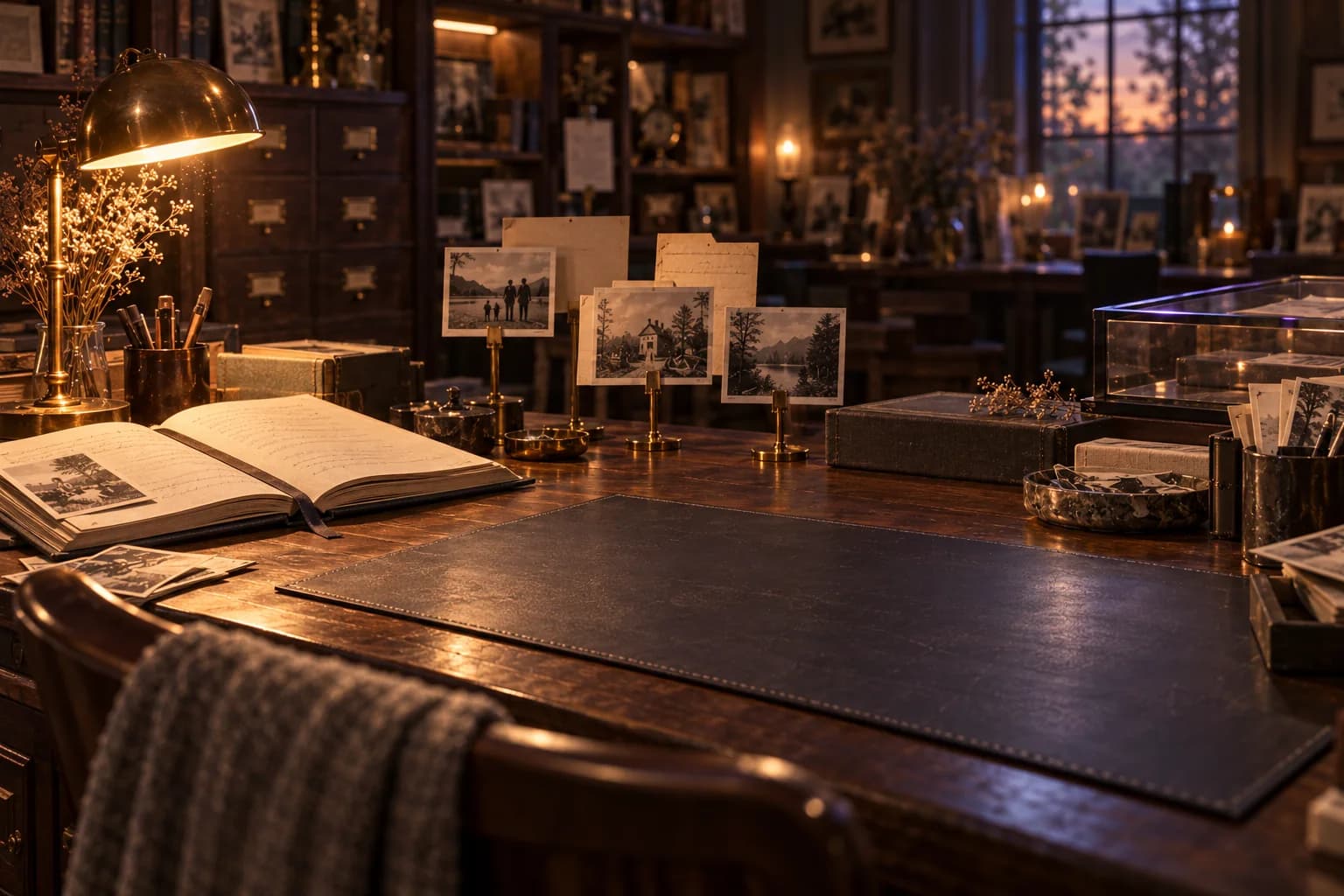
iPhone / The growing memoir
Return to the archive in your pocket. Open the memoir, arrange what belongs and choose which Echoes become part of the book.
Inside the living book / Authentic native iPad captures
Folder 04 / Problems
The interface was quiet. The persistence underneath it was not always so settled.
These four studies describe real failure modes: competing ownership, a production schema that rejected changes, a memory absent on another device, and status that reassured too soon.
SwiftData CloudKit mirroring and a custom CloudKit path overlapped. Two systems were claiming responsibility for the same conceptual job.
Give Echo synchronisation one authoritative owner.
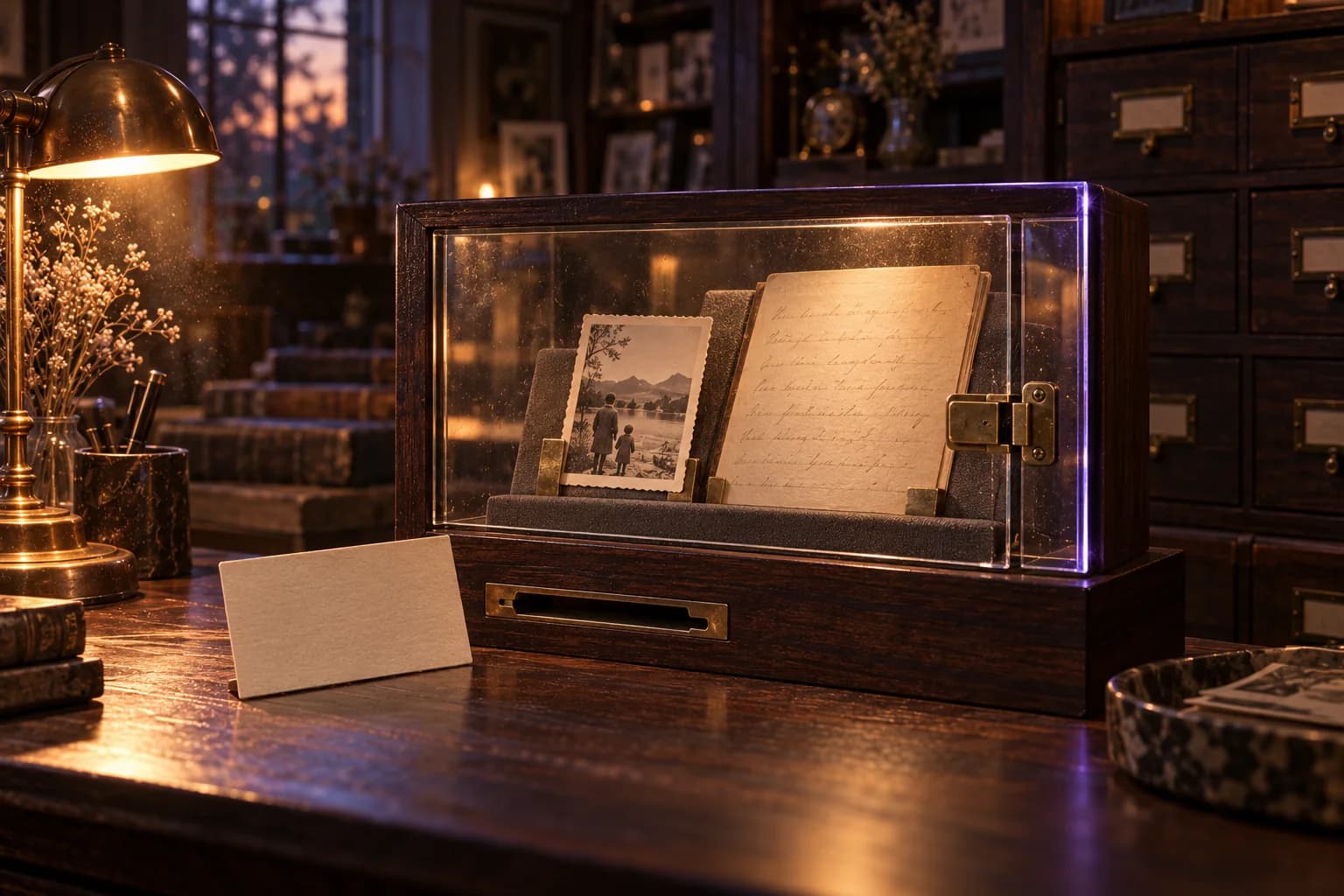
Changes that worked locally could be rejected by the production CloudKit schema. A saved memory was not necessarily a synchronised memory.
Treat production schema readiness and rejected mutations as explicit states.
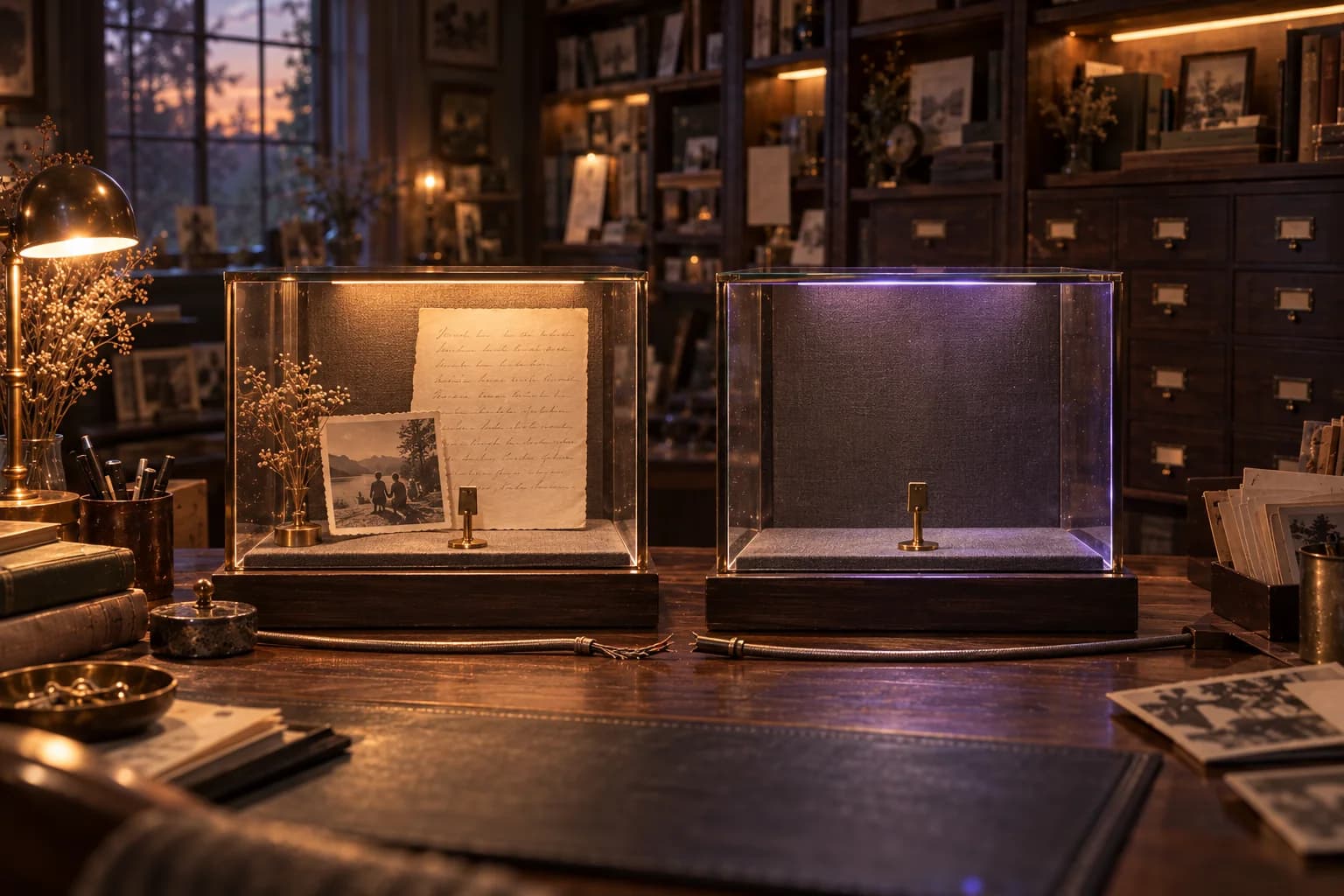
An Echo existed on one device while its place on another remained empty. Local success was not enough to demonstrate continuity.
Verify the same existing memory on both sides of the bridge.
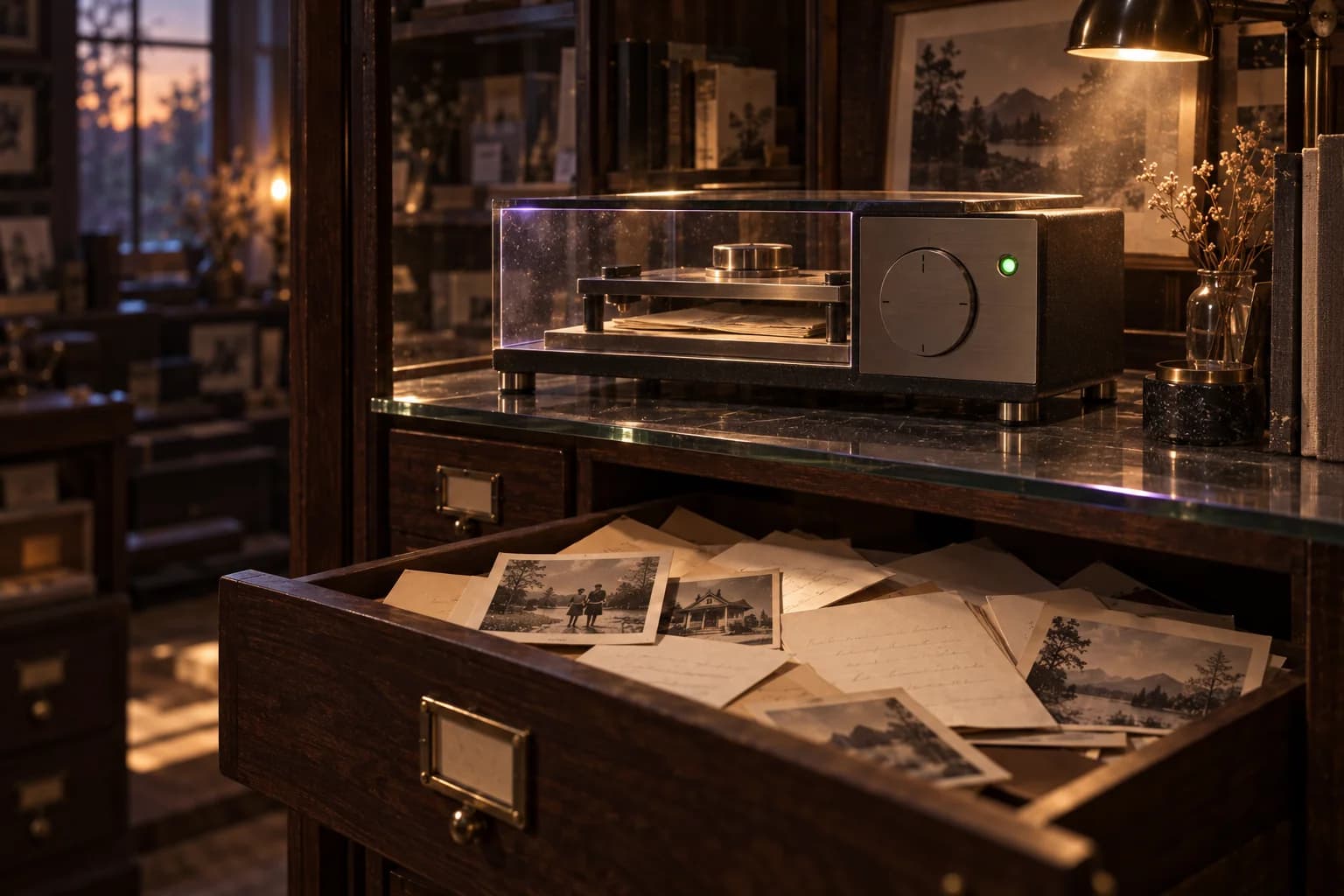
A reassuring status could hide pending work or a failed change. Compact and expanded views needed to tell the same truth.
Derive sync health from the work that remains, including failures.
Folder 05 / Solutions
One clear path for the same memory.
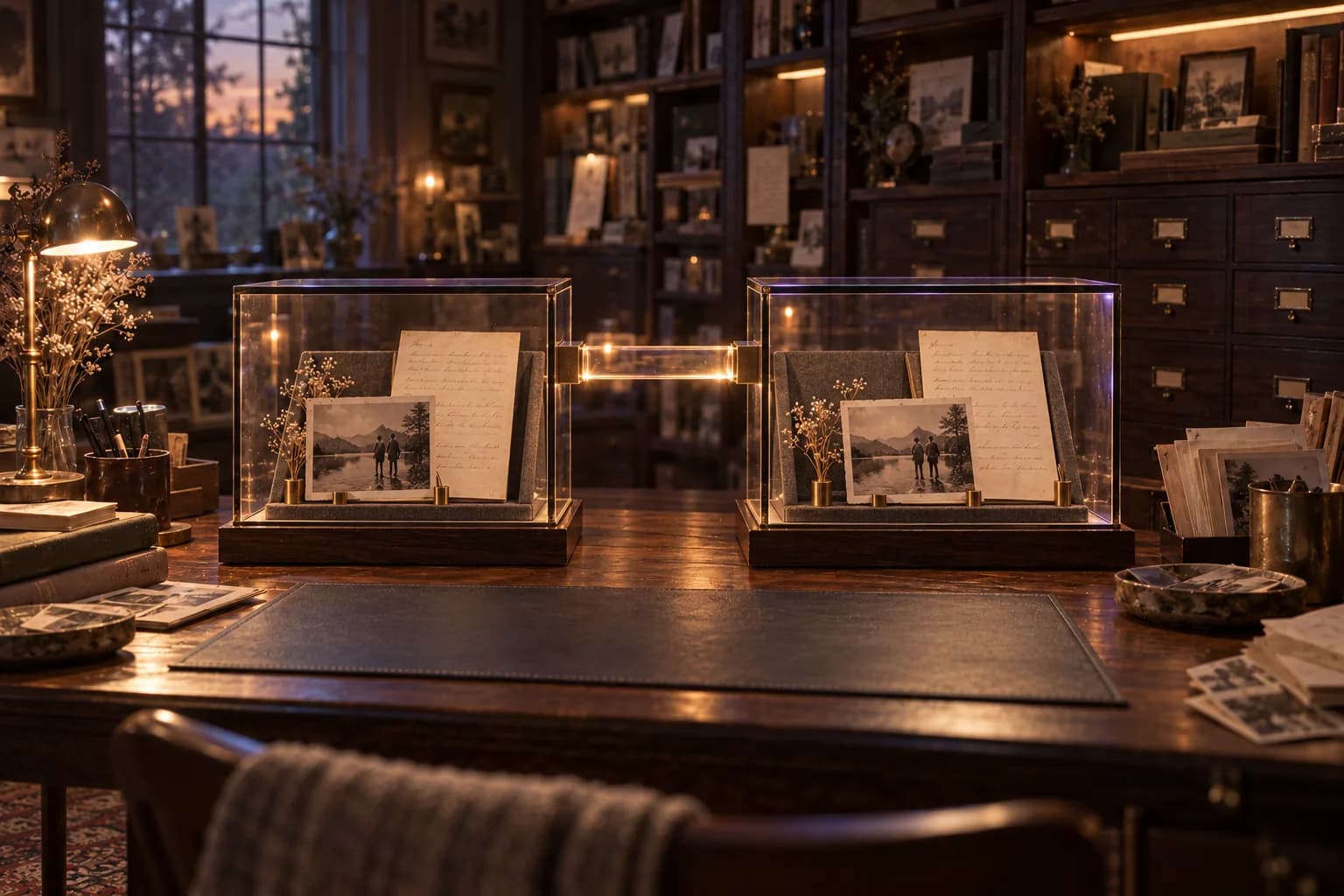
Echo synchronisation moved to one authoritative owner: CKSyncEngine. SwiftData remains the local store, with its CloudKit mirroring disabled.
Preservation note 01
CKSyncEngine owns Echo synchronisation. Removing overlapping mirroring makes responsibility clear.
Preservation note 02
Schema-aware recovery and a fresh fetch give rejected work a deliberate path forward. Account changes are handled explicitly.
Preservation note 03
Pending work and failures inform sync health. Small and large layouts describe the same underlying state.
Privacy / A condition of preservation
Family history. A private regret. Something never said in public. This material asks for more than a privacy badge.
Preservation begins with respecting the person who chose to leave the words behind.
Read the privacy policy ↗Folder 06 / Evolution
Seven conceptual mutations. Each changes what a memory can become.
An evolution of purpose / Not a release chronology
Mutation 001 / I
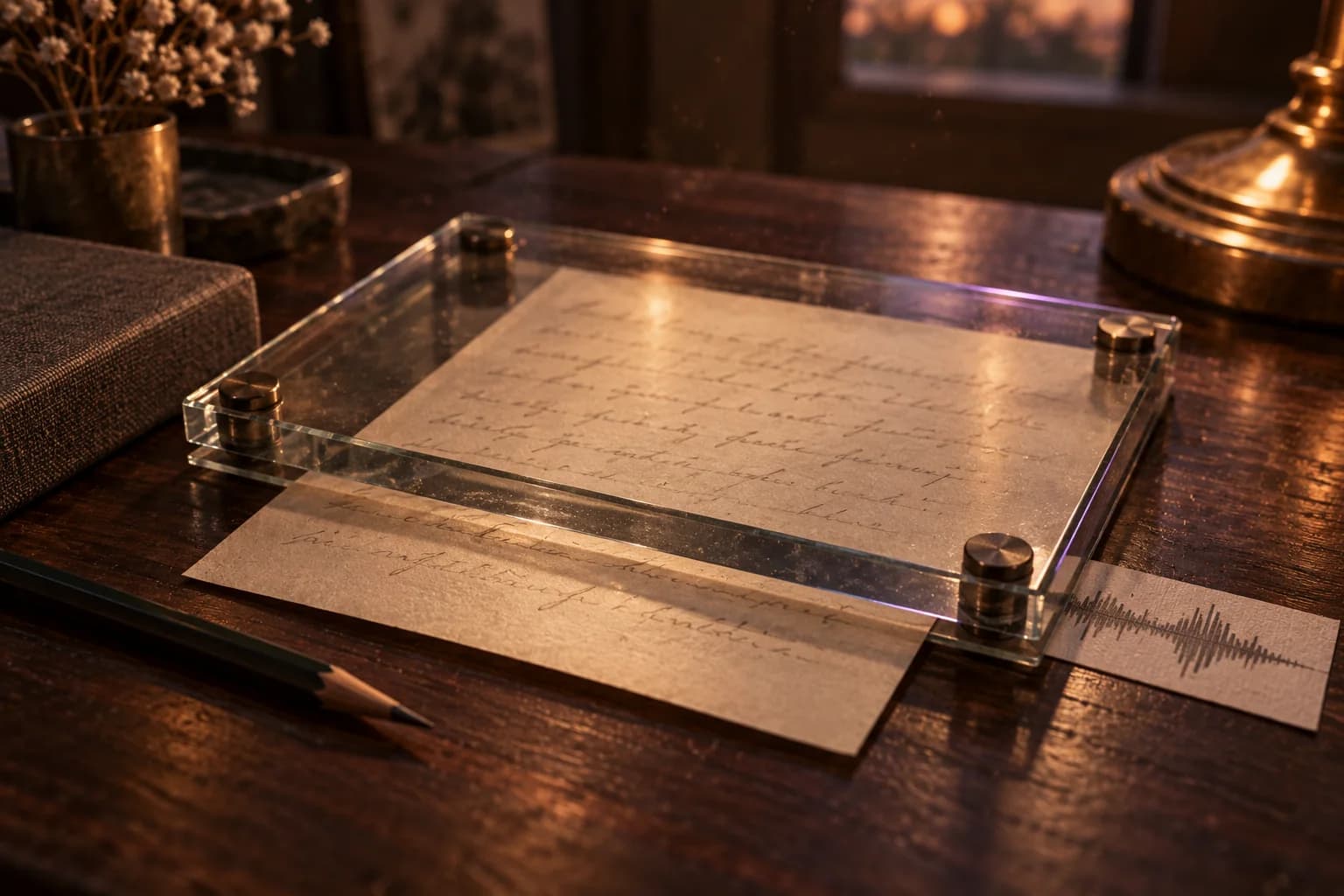
A thought becomes words that can be kept.
Capture begins with the person’s words. Original audio is not retained.
Mutation 002 / II
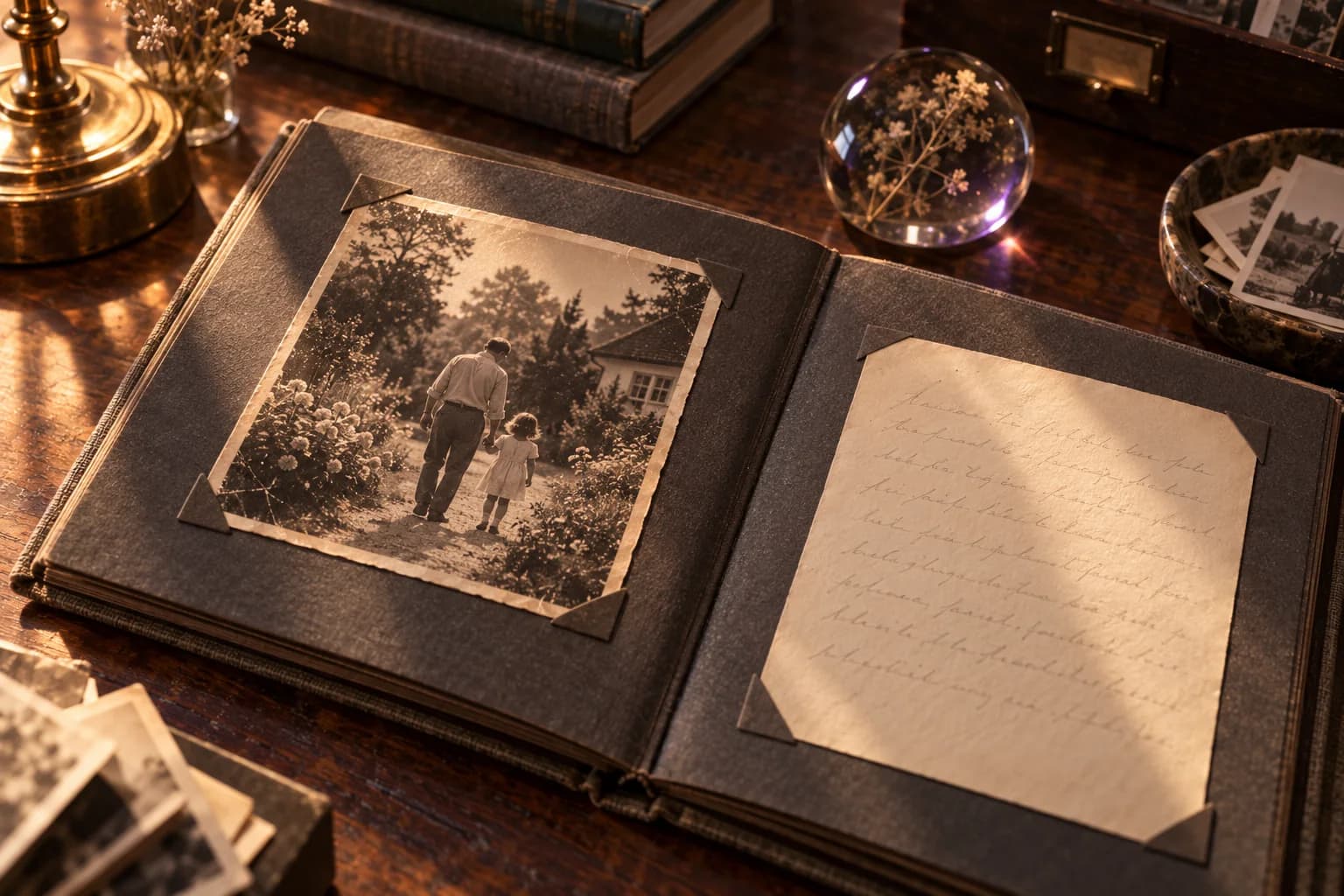
Speech becomes a structured memory.
Assistance gives the page shape while the person supplies the life.
Mutation 003 / III
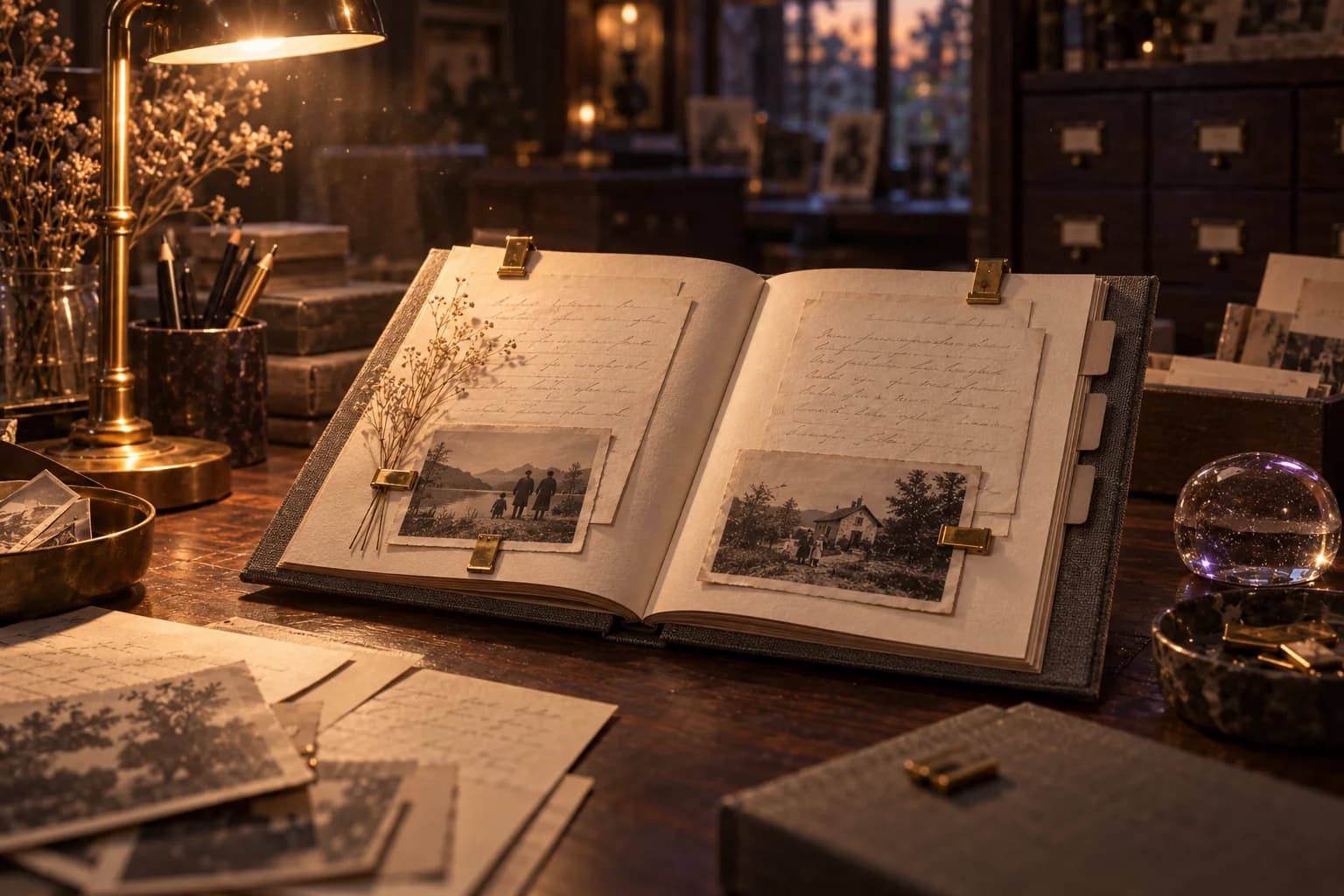
A photograph gains the story around it.
What happened just before the photograph can live beside it.
Mutation 004 / IV
Separate moments find a shared thread.
A collection becomes something a reader can follow.

Mutation 005 / V
The fragments begin to describe a life.
A growing memoir can be revisited and exported as a PDF.
Mutation 006 / VI
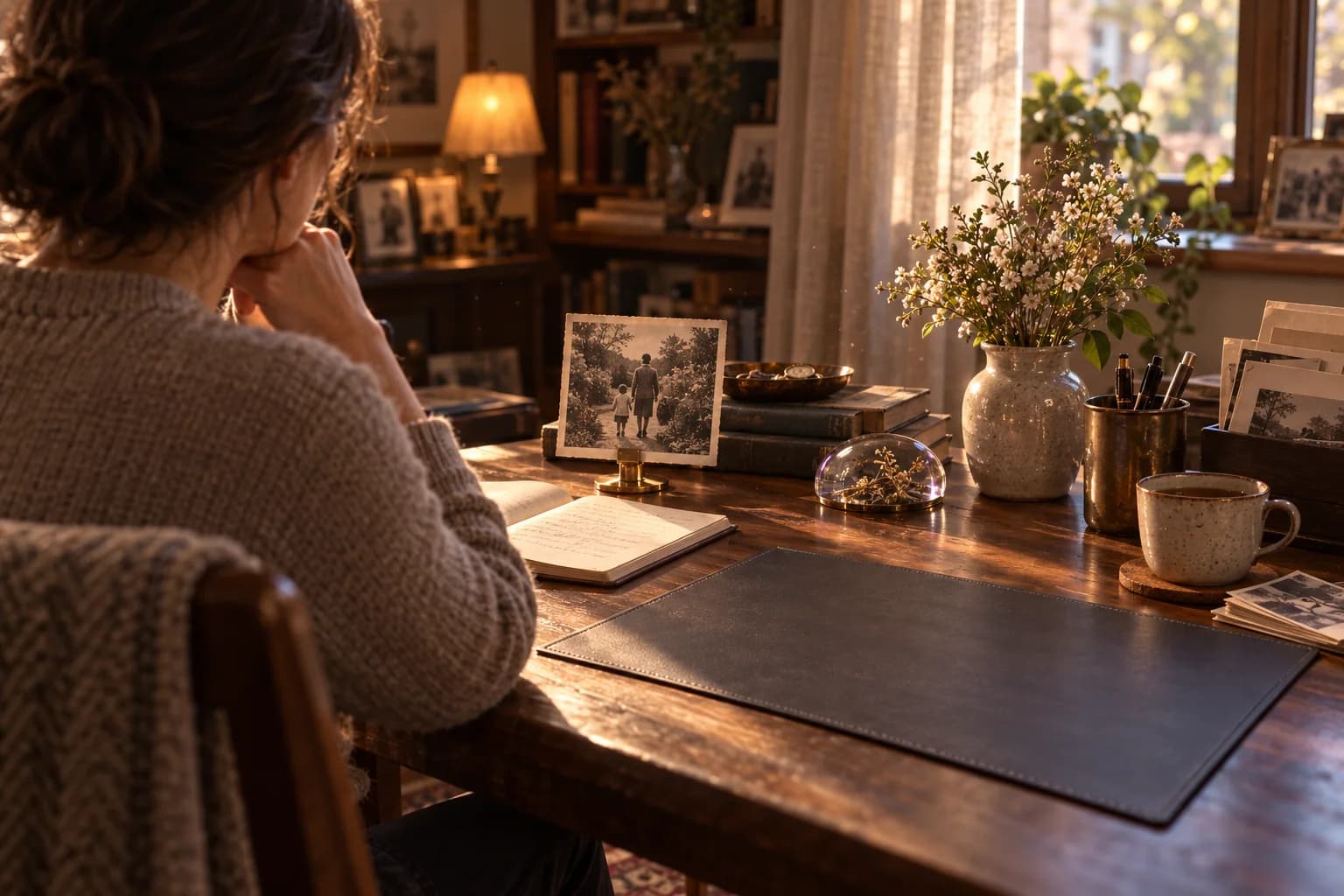
The memory follows the person across devices.
Capture and reflection share the same archive through one sync path.
Mutation 007 / VII
Someone returns to what was left behind.
A future reader meets the person’s own words and photographs. Nothing needs to be invented.
Current state / DEPLOYED
A native iPhone and iPad application for recording, reflecting and remembering. The work continues: protect the archive, make the book easier to return to, and keep the person at its centre.