Incubation Chamber / Specimen 001
GroceryMaster
The family shopping system that grew from chaos, notes, and forgotten groceries into one living list.
Lab Metadata
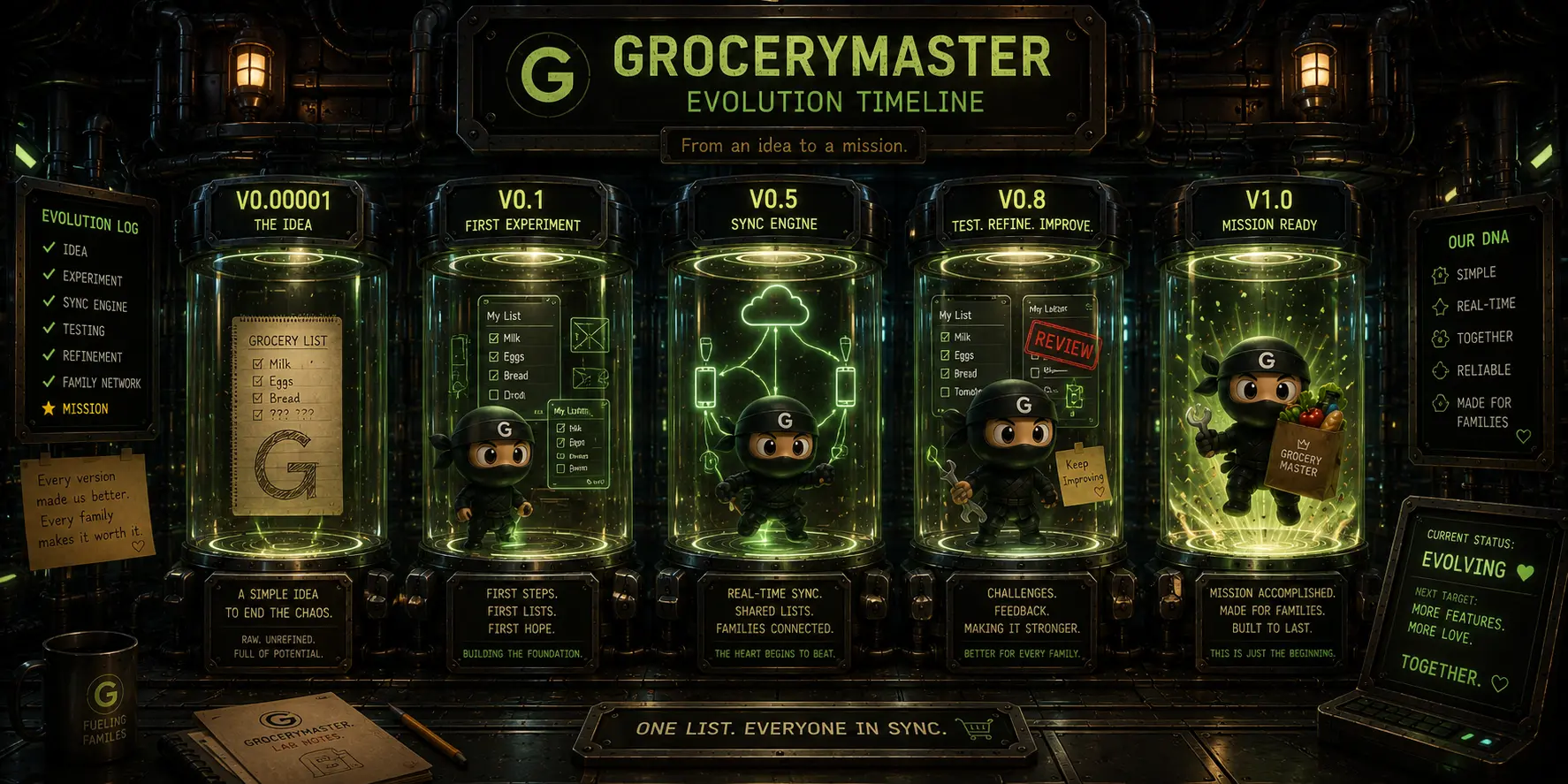
Case Study Overview
This chamber records the specimen history: why GroceryMaster was born, what failed, what changed, and how it became a deployed product.
Origin
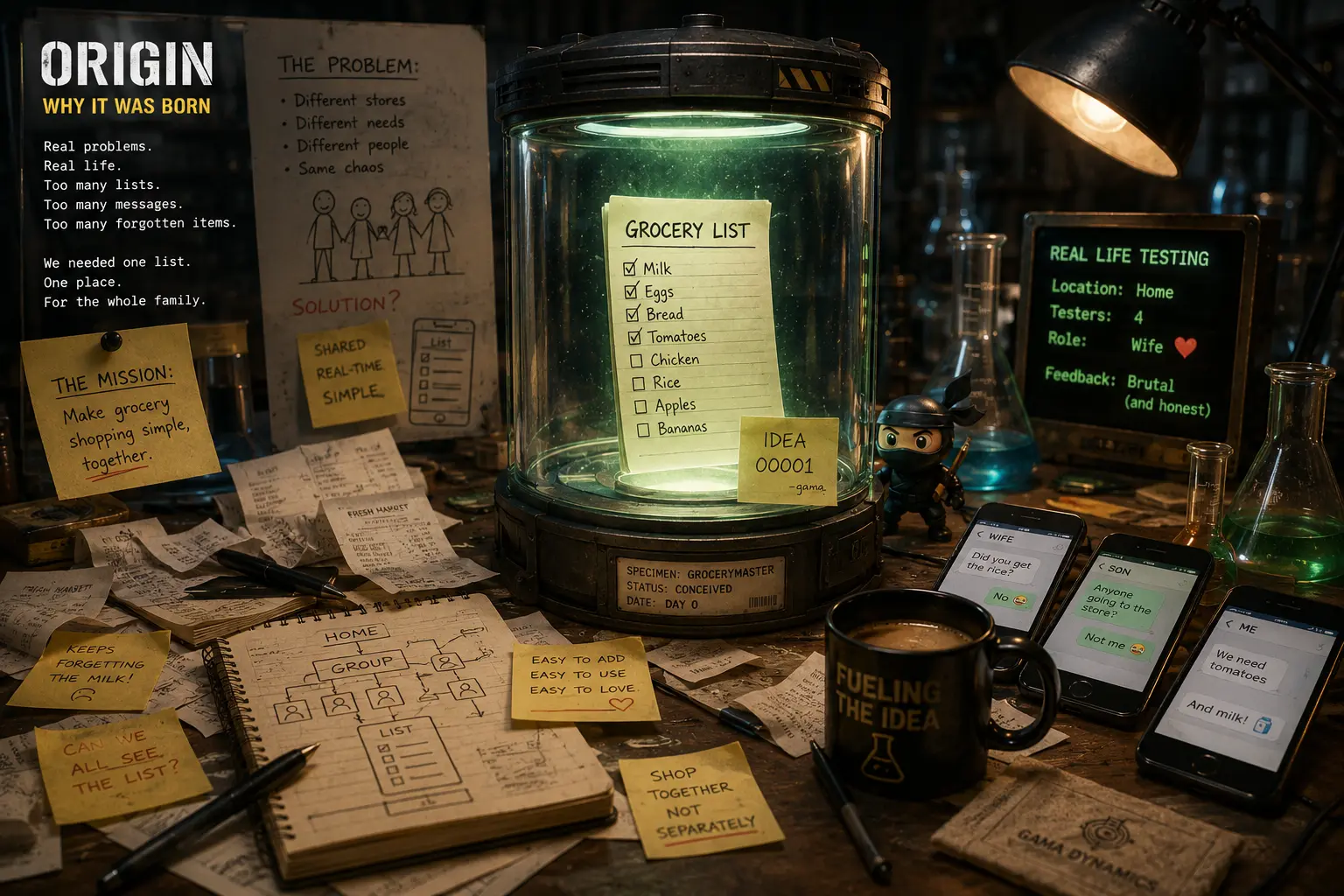
Why it was born
GroceryMaster started from a normal household problem: grocery lists were living everywhere except in one reliable place. Someone remembered milk. Someone else added eggs. Someone forgot nappies. The family list was scattered across memory, messages, and last-minute calls.
The mission became simple: one list, one home, everyone synced. The app was not designed as a productivity toy. It was designed for real family friction.
Experiment 0001
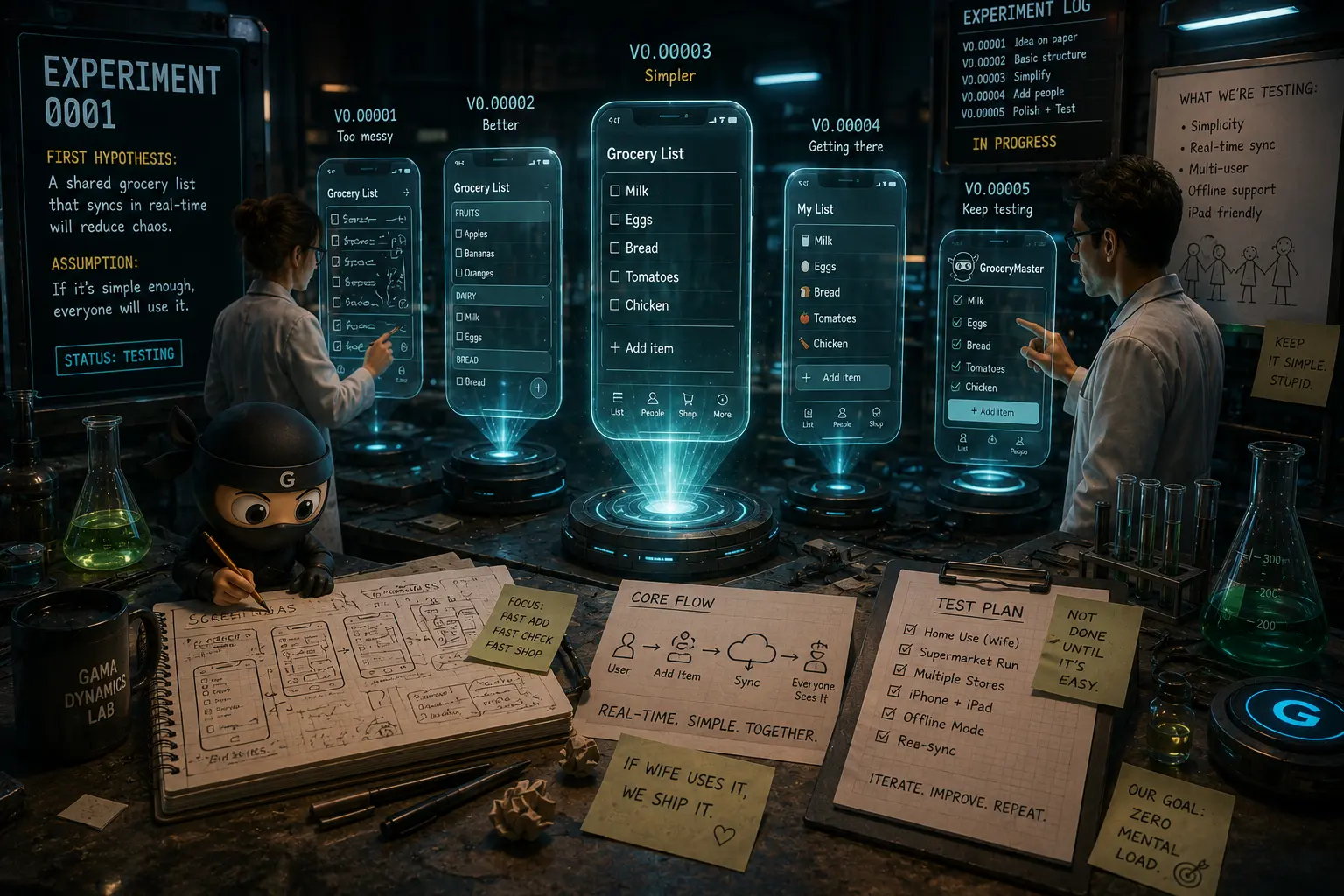
The first hypothesis
The early hypothesis was that a shared grocery list would reduce household chaos if it was fast enough, simple enough, and visible to everyone. That sounds obvious, but the real experiment was not the list. The experiment was behavior.
Would people actually use it? Would they remember to add items? Would family members understand shared ownership? Could the interface stay simple while supporting shops, people, pantry habits, and live shopping sessions?
System
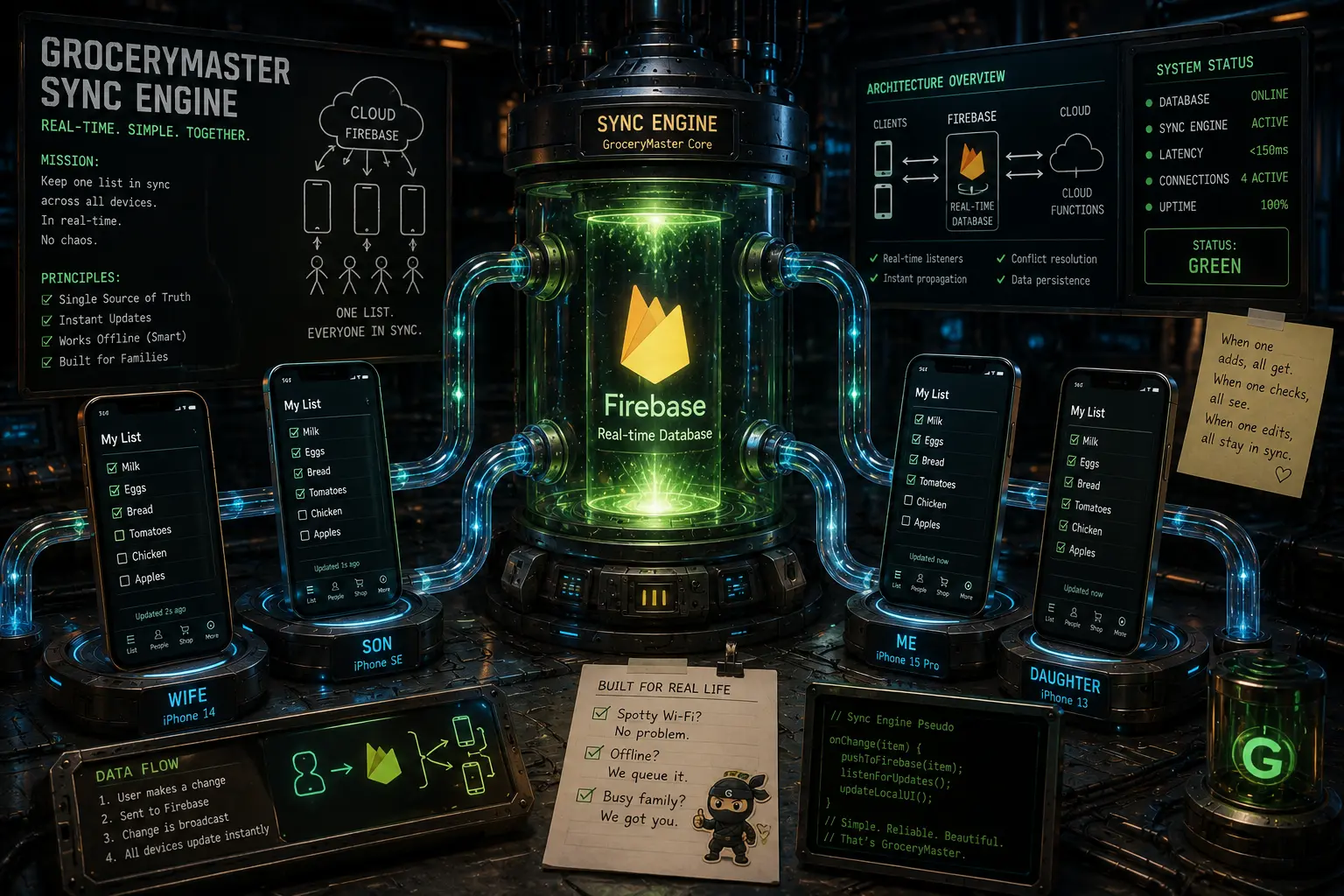
How the engine thinks
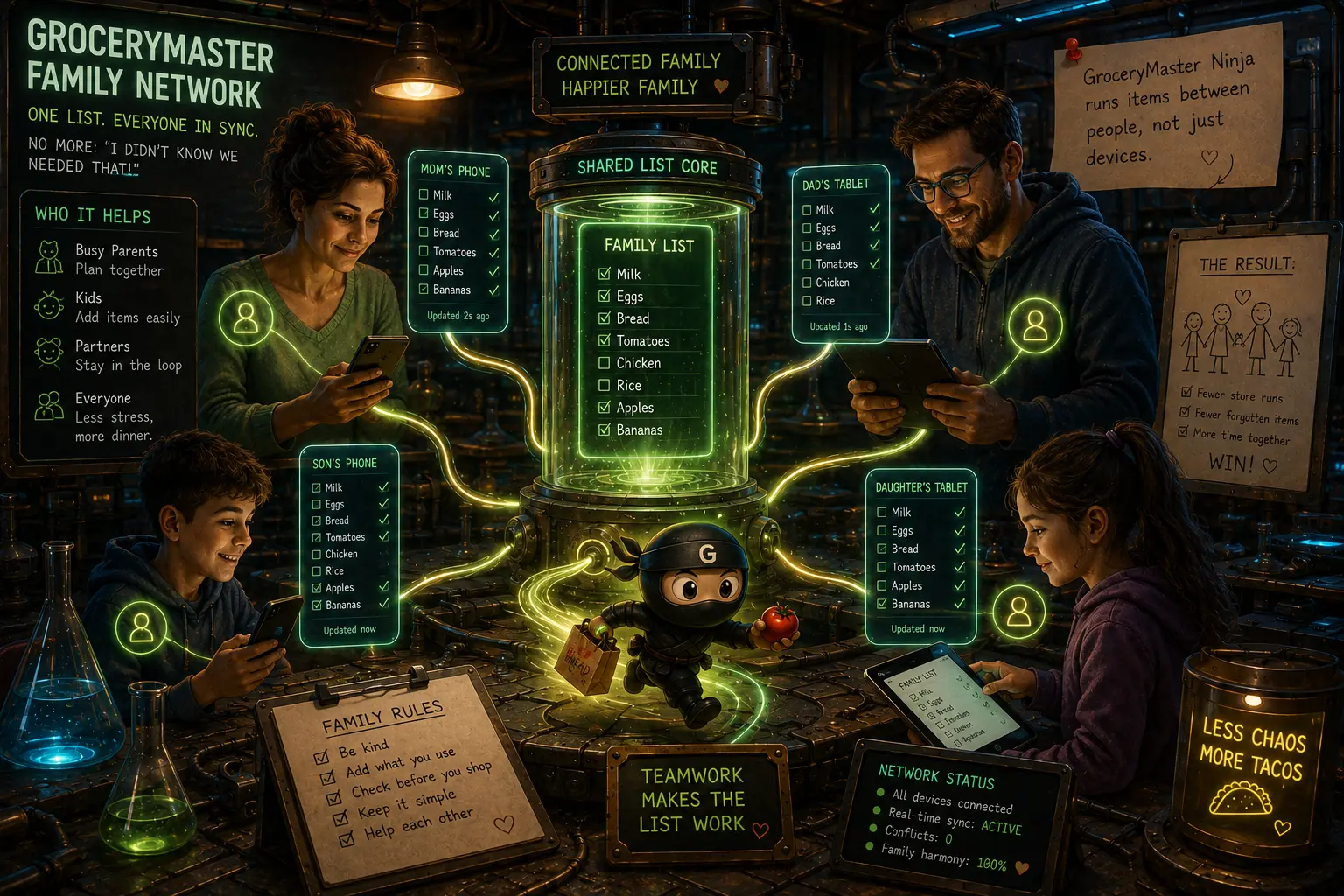
GroceryMaster uses a shared household model. A user belongs to a home group, the group owns the living list, and devices listen for changes in real time.
User → Home Group → Living List
Living List → Items → Shops → Shopping Session
One change → Sync → Everyone sees it
This is not the full implementation. It is the readable version: enough for regular people to understand the technicality without exposing the exact internals.
Problems
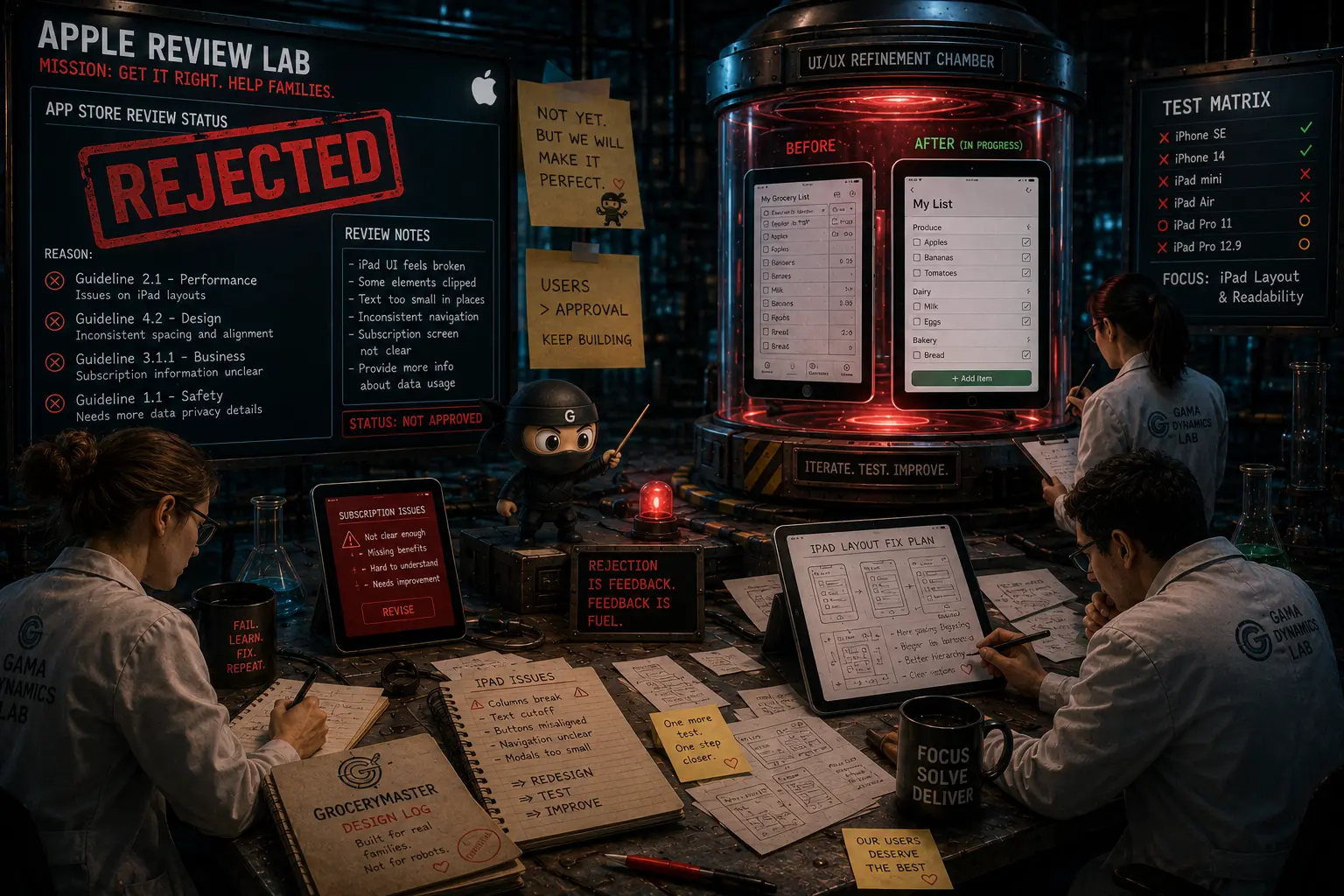
What went wrong
Solutions
How the specimen evolved
Evolution
From V0.00001 to V1.0
V0.00001
A simple idea: one list that everyone in the household can see.
V0.1
Real-time syncing, household groups, and the first shared-list structure.
V0.5
Shopping Mode, shop filters, pantry magnets, duplicate warnings, and family testing.
V0.8
Subscription logic, sponsor model, iPad fixes, compact iPhone layout, and App Store review iteration.
V1.0
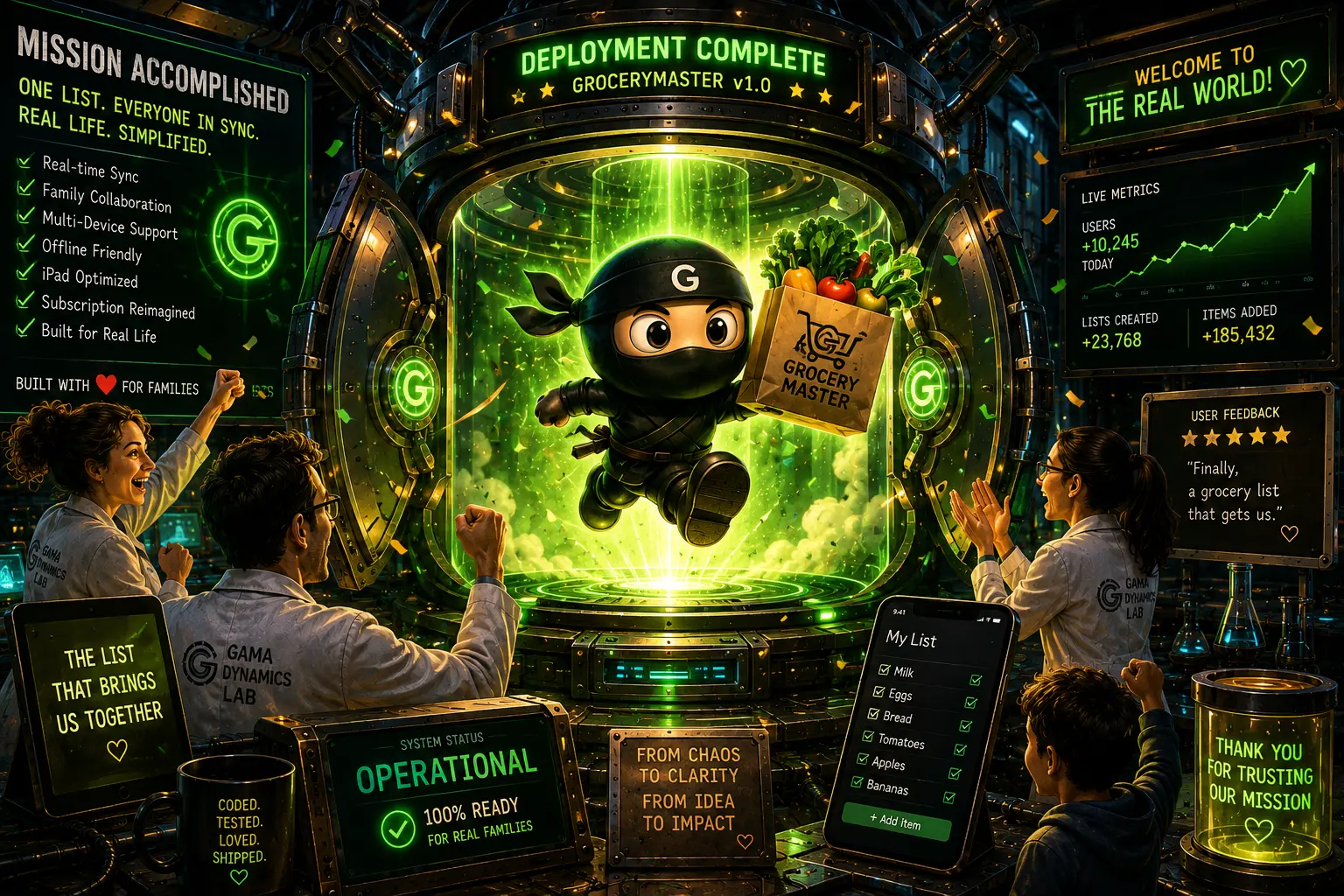
Deployed system: GroceryMaster becomes a real product instead of only a lab idea.
Current Stage
Deployed, but still evolving.
GroceryMaster is a deployed specimen, but Gama Dynamics treats shipped software as alive. The mission continues: more polish, stronger family workflows, better device support, and fewer forgotten groceries.